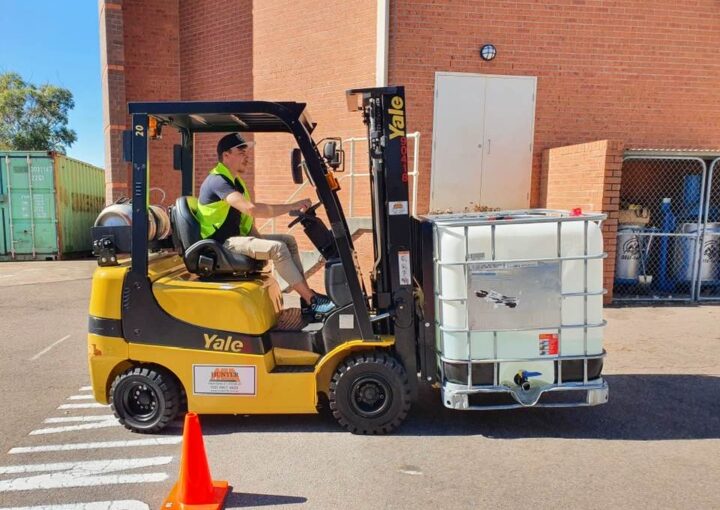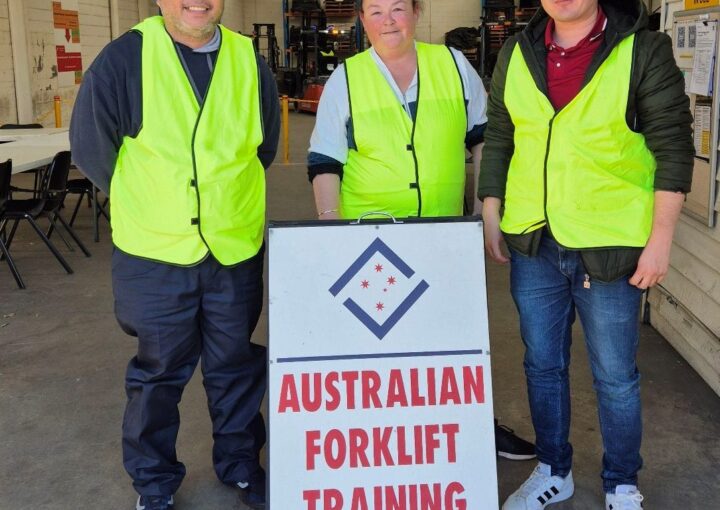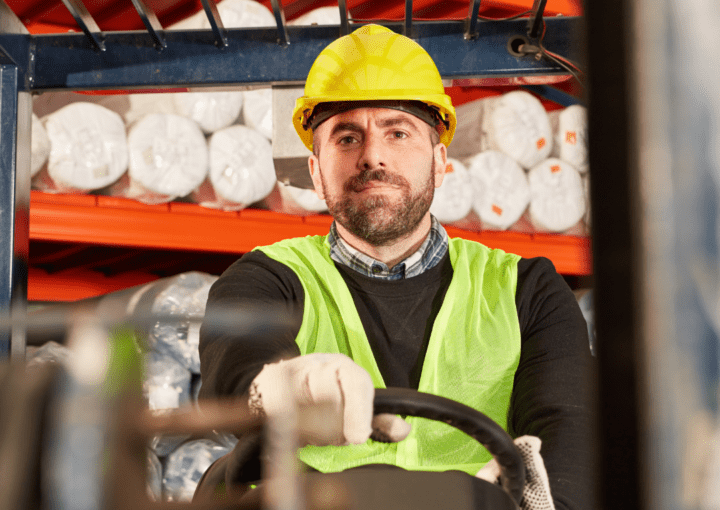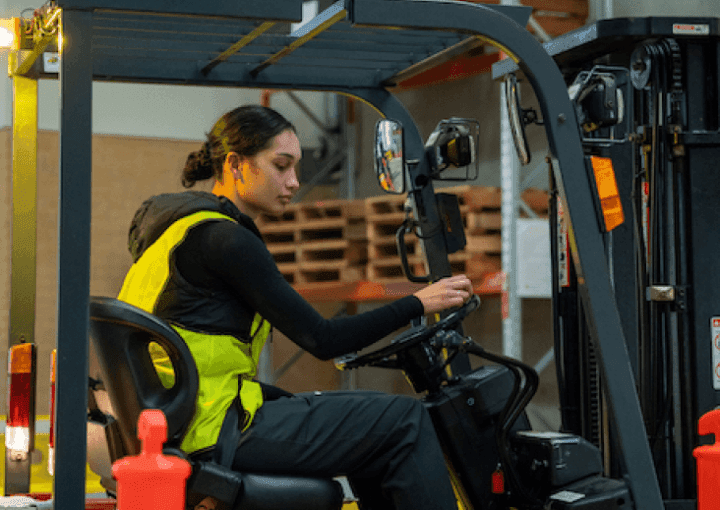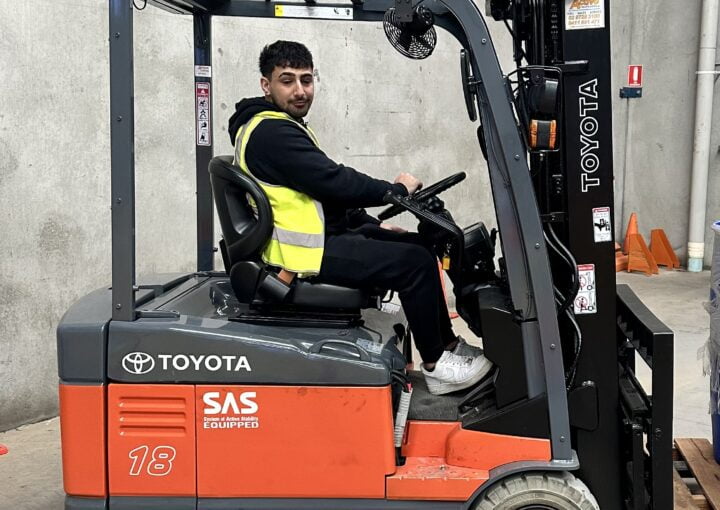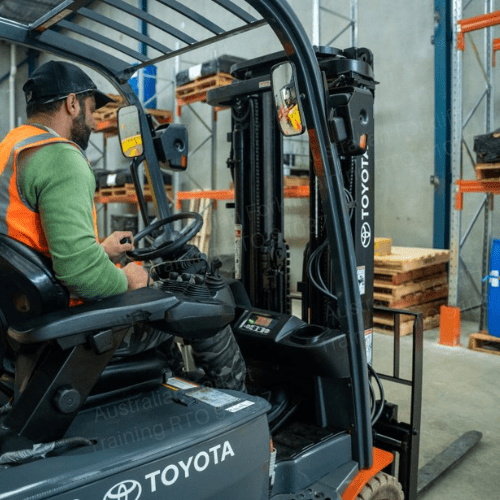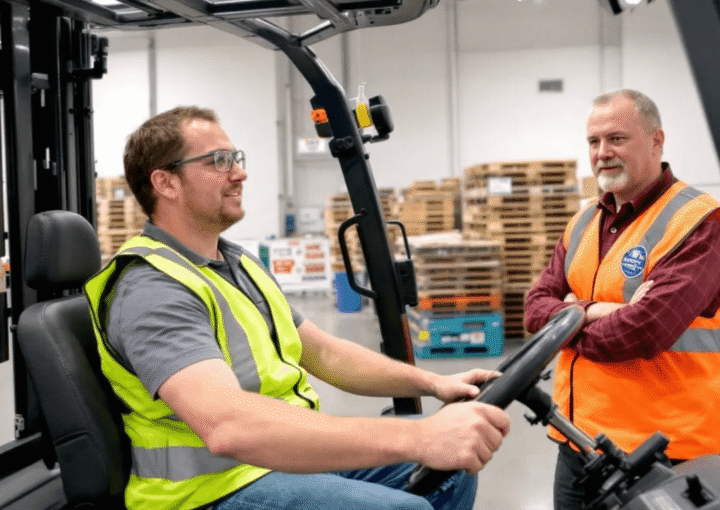

Operating a forklift in Australia requires more than just knowing how to drive – Australian Forklift Training RTO 91037, offers fully accredited, local award winning training. Forklift operation demands proper certification and ongoing compliance with strict safety regulations. With forklifts classified as high-risk equipment under Australian law, obtaining the correct licence to operate these machines is not just recommended, it’s mandatory.
Every year, approximately 2,400 serious workers’ compensation claims involve forklifts, highlighting the critical importance of proper training and certification. Whether you’re seeking to enhance your career prospects in warehousing, logistics, or construction, or you’re an employer ensuring workplace compliance, understanding Australian forklift training requirements is essential. Learning the basics of forklift operation, including safety guidelines and core skills, is crucial as it forms the foundation for successful certification and safe workplace performance.
This comprehensive guide covers everything you need to know about obtaining your forklift licence in Australia, from initial training through to ongoing compliance. You’ll discover the different types of licences available, training course options, assessment processes, and the significant career benefits that come with proper certification.
Australian forklift training operates under a nationally standardized system where all forklift operators must obtain a high risk work licence before they can legally operate a forklift truck. This licence, formally known as a “Licence to Perform High Risk Work,” replaced the earlier National Certificate of Competency system in 2007, creating a unified approach across all Australian states and territories.
The HRWL system ensures that every licensed operator has demonstrated competency in safety protocols, equipment operation, and risk management. This national recognition means that once you obtain your forklift license in one state, you can legally operate forklifts anywhere in Australia, providing excellent mobility for workers and simplified compliance for employers.
To undertake forklift training and obtain a licence, you must be at least 18 years old across all Australian jurisdictions. This age requirement reflects the serious responsibility involved in operating heavy materials handling equipment that can weigh several tonnes and operate in busy workplace environments.
Beyond age requirements, candidates must provide two forms of identification, including one photo ID, when applying for their licence. These documents are verified during the assessment process to ensure compliance with national security and workplace safety standards.
While the national framework provides consistency, each state and territory has its own SafeWork authority responsible for licence assessment and issuance:
|
State/Territory |
Authority |
Specific Requirements |
|---|---|---|
|
New South Wales |
SafeWork NSW |
Online application, digital licence card available |
|
Victoria |
WorkSafe Victoria |
Skills First funding available for eligible participants |
|
Queensland |
Workplace Health and Safety Queensland |
Regional assessment centres in major cities |
|
Western Australia |
WorkSafe WA |
Mobile assessment units for remote locations |
|
South Australia |
SafeWork SA |
CITB funding support for construction workers |
|
Tasmania |
WorkSafe Tasmania |
Combined assessments available |
|
Northern Territory |
NT WorkSafe |
Darwin and regional centre access |
|
ACT |
WorkSafe ACT |
Integrated with NSW systems |
Each authority maintains its own assessment standards while adhering to the national framework, ensuring consistency in competency requirements while allowing for local operational differences.
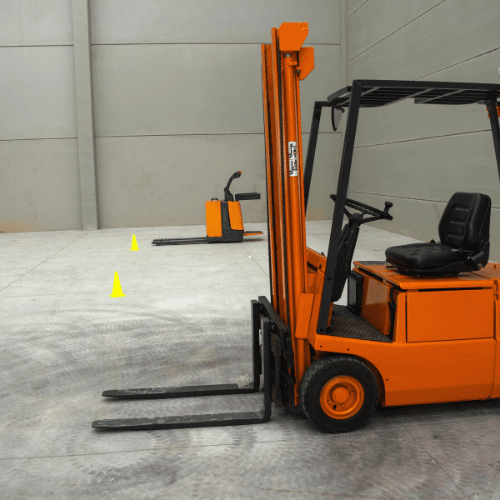
The LF class licence, designated as TLILIC0003 licence to operate a forklift truck, is the most common certification in Australia. This licence covers counterbalance forklifts, reach trucks, and other standard forklift configurations commonly found in warehouses, construction sites, and manufacturing facilities.
Operators with an LF licence can handle the majority of forklift operations including loading and unloading trucks, moving palletised goods, and stacking materials in warehouse environments. The training covers load capacity calculations, stability principles, and safe operating procedures for various terrain and workplace conditions.
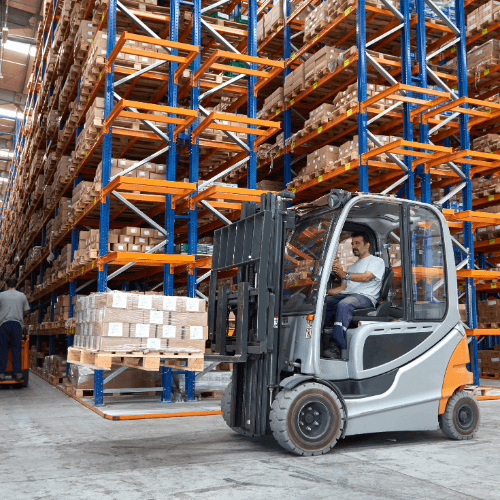
The LO licence (TLILIC0004) is specifically designed for order-picking forklift trucks where the operator is elevated together with the load. This specialisation is crucial in modern warehousing operations where workers need to access goods stored at height for order fulfillment and inventory management.
LO licence training includes additional safety protocols for working at height, fall protection procedures, and emergency evacuation techniques. This makes it essential for operators working in distribution centres, retail warehouses, and logistics facilities where vertical storage systems are common.
|
Licence Type |
Equipment Covered |
Primary Applications |
Training Duration |
|---|---|---|---|
|
LF (TLILIC0003) |
Counterbalance, reach trucks, side loaders |
Warehousing, construction, manufacturing |
1-2 days |
|
LO (TLILIC0004) |
Order pickers, elevated platform trucks |
Distribution, retail warehouses, logistics |
1-2 days |
|
Combined LF/LO |
All forklift types |
Versatile workplace operations |
2-3 days |
|
High Reach Specialist |
Extended reach forklifts |
High-bay warehouses, container handling |
Additional 1 day |
Many participants choose to obtain both LF and LO licences during their initial training, as this combination provides maximum employment flexibility and career advancement opportunities across different industry sectors.
Modern australian forklift training combines online theory components with hands-on practical training to maximise learning outcomes while providing flexible training options for participants. This blended approach allows students to complete theoretical modules at their own pace before attending practical sessions at training centres or workplaces.
The online components typically include interactive modules covering Australian safety standards, load calculation principles, and hazard identification procedures. Students can access these materials 24/7, making it easier to complete training around work schedules and personal commitments.
For participants with previous forklift experience, express half-day courses provide a streamlined path to certification. These accelerated programs focus on assessment rather than extensive training, allowing experienced operators to demonstrate their existing skills and knowledge while ensuring compliance with current Australian standards. The express forklift training course is designed specifically for experienced forklift operators, enabling them to quickly validate their competencies.
Express courses typically include a brief refresher on current regulations followed by practical assessment. This approach helps experienced workers obtain formal certification quickly while ensuring they meet all safety and competency requirements.
New operators benefit from full comprehensive courses lasting 1-2 days that provide thorough grounding in forklift operation. These programs are designed for beginners with no prior experience and cover everything from basic machine controls to advanced safety procedures.
The structured approach ensures participants develop confidence and competence progressively, with qualified trainers providing individual support and guidance throughout the learning process. These courses emphasize safety as the foundation for all forklift operations.
For companies needing to train multiple employees, on-site corporate training provides cost-effective solutions for groups of 6 or more participants. This approach allows organizations to train their team members using their actual equipment and workplace environment, enhancing the practical relevance of the training.
Corporate training can be customised to address specific workplace hazards, equipment types, and operational procedures unique to each organisation. This targeted approach often results in better safety outcomes and improved operational efficiency.

The online portion of nationally accredited forklift training includes comprehensive theory modules covering load capacity calculations, stability principles, and Australian safety regulations. These interactive modules use multimedia presentations, case studies, and knowledge checks to ensure thorough understanding of critical concepts.
Students can progress through the material at their own pace, with 24/7 access allowing them to study around work and personal commitments. Progress tracking systems help participants identify areas requiring additional focus before moving to practical training components.
Interactive online modules teach participants how to conduct thorough pre-operational inspections, covering mechanical checks, safety systems verification, and documentation requirements. This training ensures operators understand their responsibility to verify equipment safety before each use.
The modules include detailed checklists and procedures that participants will use during practical assessment and throughout their careers as licensed operators. This emphasis on inspection procedures significantly contributes to workplace safety outcomes.
The theory assessment covers Australian safety standards, workplace regulations, and technical knowledge essential for safe forklift operation. Participants must demonstrate understanding of load calculations, stability principles, hazard identification, and emergency procedures through a comprehensive written test.
The assessment includes scenario-based questions that test practical application of theoretical knowledge, ensuring candidates can apply safety principles in real workplace situations. A passing grade on the theory component is required before proceeding to practical assessment.
The practical assessment involves hands-on evaluation using various forklift models to test competency across different equipment types. Certified assessors evaluate participants’ ability to conduct pre-operational checks, operate controls safely, handle loads correctly, and respond appropriately to workplace hazards.
The assessment covers essential skills including load handling, precise maneuvering in confined spaces, stacking procedures, and emergency stop techniques. Participants must demonstrate consistent safe operation throughout the assessment period to achieve successful completion.
Australian forklift training follows a competency-based assessment model where participants must demonstrate specific skills and knowledge rather than simply completing a set time period. This approach ensures that every licensed operator has proven their ability to operate forklifts safely and effectively.
The assessment criteria are clearly defined and consistently applied across all registered training organisation providers, ensuring national standards are maintained regardless of where training is completed. This consistency supports workforce mobility and employer confidence in licence validity.
Upon successful completion of both theory and practical assessments, participants receive a Statement of Attainment from their registered training organisation. This document serves as proof of successful training completion and is required when applying for the official high risk work licence. Applicants must submit their licence application within 60 days of passing the assessment to the relevant work safety authority to ensure timely processing and compliance.
The actual licence is issued by the relevant state SafeWork authority after verifying training completion and identity documentation. Digital licence cards are now available in most states, providing convenient proof of certification that can be easily verified by employers and safety inspectors.

Australian forklift training is delivered through an extensive network of accredited training organizations with RTO Australian Forklift Training, located in Sydney, delivering high quality training for over 25 years.
These major centres typically offer the widest range of course options, including weekend and evening classes to accommodate diverse work schedules. Many urban locations also provide specialised equipment training and advanced certifications beyond basic forklift operation.
Regional centres in locations such as Cairns, Townsville, Newcastle, and Wollongong ensure that participants outside major cities can access quality training without extensive travel. These facilities often coordinate with major training providers to maintain consistent standards while serving local communities.
Regional training centres frequently offer flexible scheduling to accommodate local industry patterns, such as seasonal work cycles in agricultural areas or shift patterns in mining regions. This flexibility helps ensure that all Australian workers can access the training they need for career advancement.
For remote locations and large worksites, mobile training units provide on-site course delivery to areas where fixed training centres may not be practical. These mobile solutions are particularly valuable for mining operations, large construction projects, and remote industrial facilities.
Mobile training maintains the same assessment standards and certification outcomes as fixed centres while providing convenience and cost savings for organizations with multiple trainees. The equipment used in mobile training is regularly updated to reflect current industry standards and safety requirements.
All forklift training must be delivered by registered training organisation providers who maintain national accreditation and employ qualified trainers with current industry experience. This accreditation system ensures consistent quality and recognition of certifications across Australia.
When selecting a training provider, participants should verify RTO registration status and ensure the provider offers nationally recognized qualifications. This verification protects students’ investment and ensures their certification will be accepted by employers throughout Australia.
Forklift licence course costs typically range from $375to $475 for standard LF certification across Australia, with prices varying based on location, provider, and included services. These costs generally cover all training materials, equipment use, assessment fees, and Statement of Attainment issuance. Many training providers offer discounts or special sales for forklift courses, sometimes saving students up to $164 off regular prices, making certification more accessible and affordable.
Combination LF/LO courses that provide dual certification typically cost between $610 and $774, offering significant value for participants seeking maximum employment flexibility. The higher cost reflects additional training time and assessment requirements for the specialized order-picking certification.
Training costs can vary between metropolitan and regional areas, with regional centres sometimes offering competitive pricing to attract participants who might otherwise travel to major cities. However, the quality and recognition of certification remains consistent regardless of location.
Some regional providers offer package deals that include accommodation for participants traveling from remote areas, making training more accessible for workers in isolated locations who need certification for career advancement.
Victorian participants may be eligible for Skills First funding that significantly reduces training costs for eligible individuals. This government initiative supports workforce development by subsidizing training costs for approved courses, including forklift certification.
Eligibility for Skills First funding typically requires Australian citizenship or permanent residency, along with meeting specific employment or educational criteria. Participants should verify their eligibility before enrolling to maximize the financial benefits available.
In South Australia, the Construction Industry Training Fund (CITB) provides financial support for construction workers seeking forklift certification. This industry-specific funding recognizes the importance of proper equipment operation in construction safety outcomes.
CITB support helps construction companies invest in worker training while reducing individual costs for workers seeking to enhance their skills and career prospects within the construction industry.
Organizations training multiple employees often receive significant discounts for group bookings, with savings increasing based on the number of participants. These corporate packages may also include additional services such as on-site delivery, customized content, and flexible scheduling.
Group training allows companies to ensure consistent training standards across their workforce while achieving cost efficiencies. Many providers offer ongoing training relationships that include refresher courses and additional certifications as business needs evolve.
Australian forklift licences require Verification of Competency assessment every five years to maintain validity. This requirement ensures that operators stay current with evolving safety standards, equipment technology, and workplace regulations throughout their careers.
The VOC process recognizes that experienced operators may have developed habits or may not be aware of updates to safety standards since their initial training. Regular verification helps maintain high safety standards across the Australian workforce.
VOC assessments are typically shorter than initial training courses, focusing on key competency verification rather than comprehensive retraining. Experienced operators can usually complete VOC requirements in a half-day session that includes updated theory and practical demonstration.
The streamlined process acknowledges existing experience while ensuring operators remain competent and compliant with current standards. This approach balances efficiency with safety requirements, making ongoing compliance manageable for working professionals.
VOC training includes updates on any changes to safety standards, equipment requirements, or regulatory compliance that have occurred since the operator’s last assessment. This ensures that all licensed operators remain current with best practices and legal requirements.
Technology updates, new safety features, and evolving workplace practices are incorporated into VOC training to help experienced operators adapt to changing industry conditions. This ongoing education supports career development and workplace safety.
Verification of Competency courses typically cost between $199 and $249, making ongoing compliance affordable for working professionals. Most training providers that offer initial certification also provide VOC services, ensuring continuity and familiarity for returning participants.
The lower cost of VOC compared to initial training reflects the reduced time and assessment requirements while maintaining the same rigorous standards for competency verification.

Forklift certification opens doors to employment opportunities across warehousing, logistics, distribution, construction, mining, and manufacturing sectors. The versatility of this qualification makes it valuable for workers seeking stable employment or career change opportunities.
With Australia’s growing logistics and e-commerce sectors, demand for qualified forklift operators continues to increase. Major employers actively seek candidates with current certification, making this training a valuable investment in career security and advancement.
Licensed forklift operators in Australia typically earn between $45,000 and $65,000 annually, with variations based on location, industry sector, and level of experience. Specialized operations, such as those requiring multiple certifications or working in high-demand industries like mining, often command premium wages.
The earning potential increases significantly for operators who pursue additional certifications, supervisory training, or specialized equipment operations. This progression path provides clear opportunities for career advancement and increased job security.
Forklift certification often serves as a foundation for progression into supervisory roles, warehouse management, and logistics coordination positions. The operational knowledge and safety awareness gained through certification provides valuable background for management responsibilities.
Many warehouse managers and logistics supervisors began their careers as forklift operators, using their practical experience as a stepping stone to higher-level positions. The safety knowledge and workplace awareness developed through proper training translates effectively to management responsibilities.
The comprehensive safety training required for forklift certification provides knowledge and skills applicable across multiple workplace environments. Understanding risk assessment, hazard identification, and safety protocols benefits workers throughout their careers, regardless of specific roles.
This broader safety competency makes certified operators valuable team members who contribute to overall workplace safety culture. Employers recognize and value this contribution, often leading to increased responsibilities and career advancement opportunities.
With automation changing many industries, skilled equipment operators remain in demand for tasks requiring human judgment, flexibility, and problem-solving capabilities. Proper certification demonstrates professional competence and commitment to safety, making operators attractive to quality employers.
The national recognition of Australian forklift licences provides employment mobility, allowing workers to pursue opportunities across states and territories without additional training requirements. This flexibility enhances career options and job security.
The AS 2359 Australian Standard provides comprehensive guidelines for powered industrial truck safety, covering design, operation, inspection, and maintenance requirements. This standard forms the technical foundation for forklift training and workplace operations across Australia.
Training providers must ensure their programs align with AS 2359 requirements, covering topics such as load capacity calculations, stability principles, inspection procedures, and operational safety protocols. Compliance with this standard is mandatory for all forklift operations.
The Work Health and Safety Act 2011 establishes the legal framework requiring employer provision of adequate training and employee competency verification. This legislation makes proper forklift training not just good practice, but a legal obligation for all Australian workplaces.
Employers face significant penalties for allowing unlicensed operation of forklifts, with fines starting at $100,000 and potentially reaching $10 million in cases involving serious incidents. These penalties underscore the critical importance of proper certification and ongoing compliance.
Australian regulations require systematic inspection and maintenance of all forklift equipment, with operators playing a crucial role in daily pre-operational checks. Training programs emphasize the operator’s responsibility to identify and report equipment defects before they become safety hazards.
The inspection protocols taught during certification include mechanical checks, safety system verification, and documentation requirements. This systematic approach significantly reduces equipment-related incidents and supports overall workplace safety objectives.
Forklift training includes comprehensive instruction on workplace risk assessment, teaching operators to identify potential hazards and implement appropriate control measures. This proactive approach to safety helps prevent incidents before they occur.
Operators learn to assess factors such as load stability, travel surfaces, visibility conditions, and pedestrian traffic when planning forklift operations. This risk assessment capability is valuable across all workplace environments and contributes to broader safety culture.
Essential safety requirements covered in Australian forklift training include:
Daily pre-operational inspections using standardized checklists
Load capacity verification and center of gravity calculations
Proper use of safety systems including seatbelts and warning devices
Speed limits and safe driving practices for workplace environments
Pedestrian awareness and traffic management in shared areas
Emergency procedures including equipment shutdown and evacuation
Incident reporting and investigation procedures
Personal protective equipment requirements and usage
These requirements form the foundation of safe forklift operation and are reinforced throughout initial training and ongoing verification processes.
The RIIHAN309F certification for telescopic handler (telehandler) operations expands career options into construction, agriculture, and specialized lifting applications. These versatile machines combine forklift and crane capabilities, requiring additional training in load dynamics and operational safety.
Telehandler certification builds on forklift fundamentals while addressing unique challenges such as extended reach operations, variable terrain capabilities, and specialized attachment usage. This advanced certification commands premium wages in construction and agricultural sectors.
Elevating Work Platform (EWP) certification complements forklift training for workers involved in maintenance, construction, and warehouse operations requiring aerial access. Many employers value workers with multiple equipment certifications for their operational flexibility.
EWP training covers fall protection, rescue procedures, and specialized safety protocols for working at height. Combined with forklift certification, this training package provides comprehensive preparation for diverse workplace equipment operations.
Modern warehouses often employ specialized equipment such as reach trucks, side loaders, and narrow aisle forklifts that require additional training beyond standard certification. These specializations support career advancement in high-tech logistics environments.
Training in warehouse management systems integration, RF scanner operations, and inventory control technology enhances the value of basic forklift certification for workers in distribution and logistics roles.
Advanced certifications in order picker and reach truck operations prepare workers for specialized warehouse roles requiring precision maneuvering and height operations. These skills are particularly valuable in modern distribution centres and retail logistics operations.
The training emphasizes spatial awareness, precision control, and efficiency optimization essential for competitive warehouse operations. Workers with these specializations often progress quickly into team leader and supervisory positions.
Many successful forklift operators pursue ongoing professional development through additional certifications, safety training, and specialized courses. This commitment to continuous learning demonstrates professionalism and enhances long-term career prospects.
Training providers often offer career development pathways that combine multiple certifications with supervisory skills, warehouse management principles, and safety leadership training. These comprehensive programs support progression from operator to management roles.
Australian forklift training represents a gateway to stable, well-compensated employment across multiple growth industries. The nationally recognized certification system ensures that properly trained operators can work anywhere in Australia while maintaining the highest safety standards.
From the initial decision to obtain certification through ongoing professional development, forklift training provides a foundation for career advancement and job security. The comprehensive safety knowledge, practical skills, and professional competency gained through proper training benefit workers throughout their careers.
Whether you’re seeking entry into the logistics industry, advancing your current career, or ensuring workplace compliance, investing in quality forklift training from a registered training organisation is a decision that pays dividends in safety, earning potential, and career opportunities.
Take the first step toward certification by researching accredited training providers in your location and exploring the funding options available to support your professional development. Your future career in Australia’s dynamic logistics and industrial sectors begins with proper forklift training and certification.
Australian Forklift Training stands out as a premier provider of forklift training and certification across Australia, delivering nationally accredited forklift training courses designed to meet the needs of both individuals and businesses. Our forklift licence course equips participants with the essential skills and knowledge required to operate a forklift truck safely and efficiently, fully aligning with the requirements for a high risk work licence. The training facilities at Australian Forklift Training are described as clean and comfortable by various students, further enhancing the overall learning experience.
We understand that flexibility is key, which is why our training courses offer a range of flexible training options. Whether you prefer to learn online or in-person, you can complete the course at your own pace, making it easier to fit training around your work and personal commitments. With our streamlined approach, participants can achieve their forklift licence in as little as half the time compared to traditional methods, without compromising on quality or safety. Australian Forklift Training is recognized for providing Australia’s fastest and most convenient forklift training, ensuring participants can quickly gain the skills they need.
Our commitment to excellence ensures that every person who completes our training is fully prepared to operate a forklift truck in compliance with Australian standards, enhancing both workplace safety and career prospects. Whether you are new to forklift operation or looking to upgrade your skills, our nationally accredited forklift training is the ideal pathway to certification and success in Australia’s dynamic industries. Many students have reported a supportive learning environment at Australian Forklift Training, which fosters confidence and skill development. Students have also praised the instructors for their expertise and helpfulness, which further enhances the learning experience.
At Australian Forklift Training, we believe that quality forklift training should lead directly to real job opportunities. As a registered training organisation, we have built strong partnerships with leading employers in the warehousing and logistics industry. These industry connections enable us to offer job placement support to our students upon successful completion of their forklift training.
Our training programs are designed to ensure every student is job-ready, with a strong focus on safety, competency, and practical skills for operating a forklift in real workplace environments. By working closely with industry partners, we help our graduates transition smoothly into employment, giving them the confidence and ability to succeed and advance in their chosen field.
With the demand for skilled forklift operators on the rise, our students benefit from increased earning potential and enhanced career prospects. Whether you are starting your career or looking to upskill, our forklift training provides the foundation you need to achieve your goals and thrive in the warehousing and logistics sectors. Participants can earn their qualification and apply their skills directly to their jobs immediately, ensuring a seamless transition into the workforce.
Safety is at the heart of everything we do at Australian Forklift Training. Our forklift training programs place a strong emphasis on security and emergency procedures to ensure every student learns to operate a forklift safely and confidently in any workplace environment.
Our experienced trainers guide students through essential emergency procedures, including how to handle heavy materials, respond to workplace accidents, and implement site-specific safety protocols. We also cover comprehensive security measures, such as emergency response plans and site safety requirements, so students are prepared to protect themselves and others while operating a forklift.
By focusing on both the skills and knowledge needed for safe forklift operation, we empower our students to maintain high safety standards and respond effectively to any situation. This commitment to security ensures that every graduate is equipped to contribute to a safer, more secure workplace.
Enrolling in our forklift training courses is simple and accessible for everyone. Participants can submit their application online or in-person, and our dedicated team is available to guide you through every step of the process. We offer flexible payment options to make training affordable, and provide additional support for students who may face language barriers or other challenges.
Once enrolled, students gain access to our online learning platform, where they can complete the theoretical components of the course at their own pace. This self-paced approach allows each person to learn in a way that suits their schedule and learning style. After completing the online modules, students participate in practical exercises and assessment sessions led by our experienced trainers, ensuring they are fully competent in operating a forklift. A Unique Student Identifier (USI) is mandatory for applicants enrolling in forklift training courses, ensuring proper tracking of their training records. Feedback from students highlights a welcoming and encouraging atmosphere during training sessions, which helps them feel supported throughout the process.
Our supportive team is committed to helping every participant complete their training successfully, providing guidance and assistance from enrollment through to certification.
Don’t just take our word for it—hear from our students who have experienced the benefits of our forklift training courses firsthand:
“I was able to obtain my forklift licence in just a few days, thanks to the flexible training options and supportive trainers. The online modules made it easy to learn at my own pace, and the practical exercises gave me the confidence to operate a forklift safely.”
“The practical assessment was thorough and really helped me understand the importance of safety in the workplace. I now feel confident in operating a forklift and know I have the skills to succeed.”
“Completing the forklift training course with Australian Forklift Training allowed me to advance my career and increase my earning potential. The support from the trainers and the quality of the training made all the difference.”
With Australian Forklift Training, you can trust that you’re receiving high-quality training, practical support, and the opportunity to achieve your goals. Join our community of successful students and take the next step toward a confident and rewarding career in forklift operation.
Australian Forklift Training delivers training for the nationally recognised units:
TLILIC0003– Licence to operate a forklift truck
TLILIC0004– Licence to operate an order picking forklift truck